
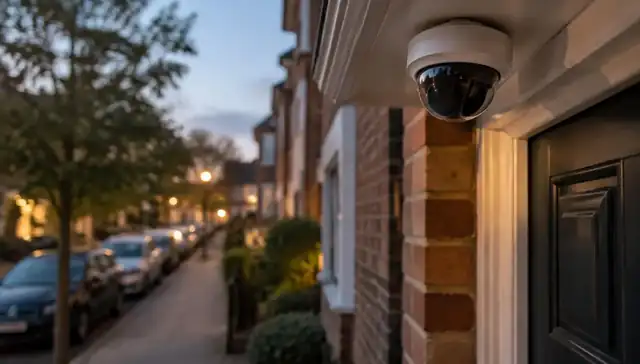
Our free site survey lets us examine the building before recommending equipment. Around Whittington Park, below Highgate Hill and through the local conversions, access and shared ownership shape the work as much as camera choice.
Start at the recorder, not the shopping list
We ask which pictures have disappeared, when the trouble began and whether recordings still exist. One dead channel points us towards its cable, power and camera; a completely dark system needs checks at the supply and recorder first. We explain what the tests establish rather than treating every failure as a reason to replace everything.
Bring us systems left behind by previous owners or firms that no longer answer. We identify the equipment and look for supported repair options. If something is obsolete, we separate that limitation from the parts that still earn their place, then price the practical alternatives.
Walking an N19 entrance without a sales pitch
During your free survey we stand where visitors wait, follow the route through the gate and look back towards the proposed lens position. A terrace entrance beneath a high front wall needs a different view from an open approach to a post-war block. We consider both without assuming an extra camera solves every obstruction.
We inspect cable access, a sheltered termination point and space for the recorder. You receive a fixed written quote describing the positions and installation work. Any chargeable diagnosis or repair is agreed separately; the free survey does not quietly become an authorised repair bill.
One front door, several households
Victorian conversions around Archway can share a small entrance while having separate private doors inside. We establish whether you are asking for your own doorway or a communal security system. Permission to occupy a flat does not automatically authorise drilling into the common frontage or recording the shared hall.
We agree the decision-maker before arranging communal work. For a managed building, that also means deciding who may retrieve footage and how residents raise a request. We avoid a setup where one resident holds everybody else's passwords, and we do not aim a private camera through another household's doorway.
Below Highgate Hill: choose the view at walking height
Stepped approaches and changes in ground level affect the angle between a lens and a face. Mounting a camera high enough to see over a wall can leave it looking down at heads. We check recognition at the entrance rather than judging the design from a wide overview on a phone.
Near busy routes by Archway Tower, traffic should not dominate an entrance alert. We draw detection areas around the approach itself, then walk through them to test the response. Bins, bicycles and an open gate belong in that test too: anything regularly parked in front of the lens can erase useful coverage.
Rain faults need a route check
A picture that cuts out in wet weather may have a damaged outdoor joint rather than a failed camera. We inspect cable entries and exposed connections, test the supply under load and look for water travelling along the cable. Replacing the visible unit alone can leave the same problem waiting for the next shower.
After remedial work we secure loose runs and seal penetrations appropriately. We then check the affected channel in playback as well as live view. If you need existing material for an incident, tell us before any recorder changes; initialising a replacement drive is not a way of recovering lost evidence.
Night images between close buildings
Infrared bouncing off a nearby wall can turn a narrow passage into a white haze. We look for reflections from brickwork, soffits and dirty covers before discussing stronger lighting. A camera looking through a window presents another reflection problem, so an indoor position is not automatically a discreet outdoor solution.
Where colour footage matters, we explain the light it needs. Any additional illumination should help your approach without flooding a neighbouring bedroom. We consider the distance to the subject, not just the headline resolution, and explain if daylight surveying leaves an evening performance check still to arrange with you.
Recorded locally, accessible on your phone
For lasting coverage we normally favour a wired route to a compatible recorder. Network cable can carry power and data to suitable PoE cameras, avoiding reliance on a wireless signal through several converted rooms. We assess existing coax separately; retaining it depends on condition and supported video formats.
We help you create controlled app access and demonstrate playback, not only a live picture. Testing over mobile data checks that access works away from the property's Wi-Fi. You hold the main credentials. If an inherited recorder remains tied to someone else's account, we use the manufacturer's legitimate recovery process after ownership checks.
Arrange the survey with the right access
Call Finchley Aerials on 0800 206 2385, free to call, or WhatsApp 07595 292534. We answer Mon-Sat 8am-7pm and offer same-day attendance when the schedule allows. Describe the fault and send the recorder make if you can read it safely; there is no need to climb for a label.
Let us know about controlled parking, locked side gates and anyone who must authorise communal access. Our 25 years' experience helps us plan the visit, but we still inspect your particular building. We finish by explaining the work, the quote and what you can reasonably expect from each proposed view.