
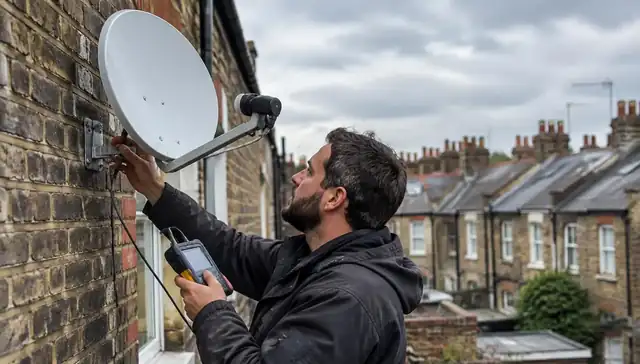
We can fit a new dish, bring an existing installation back into service or move equipment ahead of building work. Our independent service supports suitable Sky, Sky Q and Freesat receivers. We assess what is already usable and discuss the installation with you before opening the toolbox.
Plan backwards from the television cabinet
In a terrace near Cricklewood Broadway, the preferred viewing room may be at the back while an old satellite lead enters upstairs at the front. We look at the whole route, including doorways, extensions and finished decorations. Reaching the receiver neatly matters more than copying the previous installer's shortest outdoor run.
We agree where each penetration will go and how exposed coax will be supported. Suitable screened cable and properly made terminations help preserve the signal along the route. Existing wiring can remain if testing supports it; we do not assume that a cable marked satellite is still in good electrical condition.
Building work can change a working dish position
Development around Brent Cross is a reason to inspect the current surroundings rather than trust an old installation photograph. Satellite reception needs a direct path towards a specific orbital position. UK Sky and Freesat dishes generally receive from the group at 28.2 degrees east; they cannot be redirected towards any convenient patch of sky.
We assess neighbouring buildings, trees and planned extensions from each realistic mounting point. Scaffolding can temporarily interrupt a previously clear path. If you are arranging roofing or an extension, speak to us before access becomes difficult so we can plan a safe dish move and avoid leaving unsupported cables behind the new work.
Use the right LNB for your receiver generation
Sky Q and conventional satellite receivers do not necessarily use the same feed arrangement. Freesat equipment also varies between models. We ask for the exact product details, inspect the receiving head on the dish arm and establish how many connections are required for the functions you expect to use.
Changing platforms does not automatically require a different dish reflector. The appropriate work might be an LNB change, a cable alteration or simply restoring a faulty connection. Where two receiver types must coexist, we assess compatible options instead of disconnecting one room to get another working. Subscription matters stay with your television provider.
Ask about receiver compatibility →Satellite work in West Hampstead →
Investigate intermittent pictures before replacing hardware
Describe what happens when reception fails: missing channels, a warning on one input, or loss during wind and rain. Each gives us a starting point, not a diagnosis. We check the mechanical support, alignment, LNB outputs and cable path to separate a reception problem from an indoor connection fault.
A moving bracket needs attention before fine alignment. Water inside a connector needs more than another turn of the dish. We explain which components have failed and retain sound parts where practical. After the repair, we test again at the receiver rather than relying solely on a good reading beside the dish.
Converted houses require a clear agreement
An Edwardian house split into flats may have several dishes and unlabelled leads outside. Before removing anything, we establish which equipment serves your home and what belongs to other residents. A redundant-looking cable may still feed an upstairs receiver, so identification comes ahead of tidying the wall.
Permission for shared walls, roof access and cable routes should be settled with the appropriate owner or agent. Newer Brent Cross Town apartments may instead use managed communal distribution. We inspect the authorised feed and check compatibility within that system, rather than assuming a private dish is permitted or necessary.
Secure mounting without unnecessary prominence
We consider the strength of the fixing surface, wind exposure and service access alongside appearance. On an inter-war semi, a sound wall location may offer a better arrangement than reaching straight for the chimney. A lower position remains an option only if the required signal path is genuinely clear.
Lease conditions and any applicable planning controls need checking before installation. Protected buildings can carry additional requirements, and discretion alone does not remove them. We discuss the proposed position in advance, explain visible cable runs and identify any access equipment needed so the written scope reflects the actual job.
Permissions for satellite dishes →Hendon satellite installations →
A measured finish, with the box connected
We set alignment and LNB skew using reception measurements, then check representative services across the required feeds. A picture on a single channel is not enough to establish that a multi-feed receiver can do everything it should. We demonstrate live reception and applicable recording behaviour at the connected equipment.
The checks also include outdoor connection protection and cable support. We explain any restrictions caused by existing building infrastructure. Heavy weather can affect satellite reception, but regular failures in ordinary rain deserve investigation; improving alignment and removing cable faults can restore useful margin without making unrealistic promises about uninterrupted service.
Tell us about access when you call
Reach Finchley Aerials and Satellites on freephone 0800 206 2385, or message 07595 292534 on WhatsApp. Let us know your street, receiver type and the work you are considering. Around busy Broadway frontages, mention parking or rear-access arrangements so we can organise the visit sensibly.
We offer free advice backed by 25 years' experience from our Britannia Road base, Finchley N12 9RU. Contact hours are Mon-Sat 8am-7pm; outside work continues until sunset where safe. Ask about same-day availability. We set out the agreed installation in a fixed written quote before you authorise the work.
Arrange a Cricklewood appointment →Neighbouring Kilburn service →