
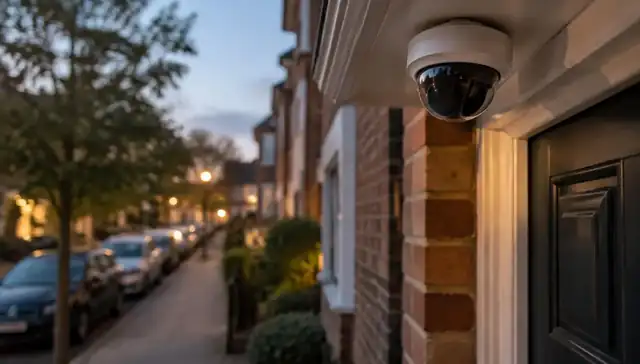
We also troubleshoot cameras, recorders and viewing apps installed by other firms. A failing system is not automatically a replacement project. Our first task is to establish what has gone wrong and explain a sensible repair. New installations begin with a free site survey and a written specification.
Keep the frontage in mind from the outset
Georgian houses, Victorian terraces and Arts & Crafts properties call for different fixing and cable arrangements. Around Hampstead Village, a convenient position on paper may be too conspicuous on the actual frontage. We consider smaller housings, alternative angles and routes that avoid drawing a line of cable across original details.
Discreet does not mean exempt from permission. We ask about listed status, conservation restrictions and ownership before drilling. Where approval is required, we help describe the intended positions and route, but the necessary consent must be established before work proceeds. We will not promise that every proposed position is permissible.
Use the free survey to settle the difficult details
We examine steps, basement access, side returns and rear gates with you. Near Parliament Hill or the Heath, changes in level can make one entrance disappear behind a wall. We check the camera's intended sightline from its mounting position rather than relying on a view from the pavement.
The survey also covers safe access for our work, cable entry points, power and recording equipment. Tell us about parking restrictions and locked communal spaces when arranging the visit. We set out the chosen work in a fixed written quote; chargeable diagnostic or repair tasks are explained separately from the free planning visit.
A useful face image is not the same as a broad overview
A camera covering a long garden can show movement without supplying enough detail at the gate. We ask what you want to recognise and at what distance. Lens choice, mounting height and light all matter; a larger resolution figure cannot compensate for an entrance occupying a tiny part of the picture.
For a converted house, we may need to distinguish your private doorway from the common approach. We discuss that distinction before recommending additional cameras. The objective is useful coverage of your access, not an unnecessary record of every neighbour coming and going through a shared entrance.
Repair the fault without disturbing sound installation work
Tell us whether the trouble affects a single image, all recordings or only the phone app. We test the relevant supplies, connections, network and recorder rather than replacing parts in a guessed sequence. A picture that fails during wet weather leads us to inspect external cable protection and joints closely.
We work on other installers' systems and check whether usable coax or network cable can remain. Compatibility must be established between cameras and recording equipment. If a recorder contains footage you need, say so before any reset, drive replacement or change to its settings; we discuss preservation before potentially destructive work.
Protect rooms as well as exterior details
Inside period houses, the shortest line between camera and recorder may cut across decorative plaster or joinery. We agree the route with you, check the surface and discuss visible trunking or other practical alternatives before making an opening. Concealment is a choice to plan, not something to improvise after decorating has been damaged.
Wired cameras are our usual recommendation for permanent coverage. They avoid relying on a wireless signal through thick walls, while a local recorder keeps footage on site. We leave that recorder ventilated and reachable, with cable connections protected but accessible for future servicing. Any necessary new power provision is identified during planning.
Shade and reflections change the night picture
A tree-lined approach near Hampstead Heath may receive very little light even when the street looks bright. We assess the actual doorway and gate. Colour night images require sufficient illumination; infrared can show a dark scene without retaining colour information.
We avoid aiming through windows, where reflections can overwhelm the image, and check nearby walls for infrared glare. If extra light is proposed, we discuss where it falls and whether it could disturb adjoining homes. Existing cameras with poor night images may need a positioning or cleaning correction rather than wholesale replacement.
Control who can see and retrieve recordings
At handover we demonstrate playback, check the date and show you how to save a short clip. We test authorised phone access outside your home network. Recording duration is calculated around the chosen capacity and settings, not presented as an unconditional promise.
For shared properties, somebody needs clear responsibility for accounts and footage requests. We explain privacy masks, limited capture and the responsibilities that can arise when filming beyond your boundary. Signage, secure access and retention need consideration; audio normally remains disabled. Our practical guidance does not replace legal advice on your particular circumstances.
Arrange a repair or a considered new installation
You can call us free on 0800 206 2385 between 8am and 7pm, Monday to Saturday. WhatsApp 07595 292534 is useful for a recorder model photograph, without passwords. Let us know your NW3 address, the symptoms and any permission or access issues.
Finchley Aerials and Satellites is based at Britannia Road, Finchley N12 9RU, bringing 25 years' experience. Advice is free, and we give a clear price before work starts. Same-day service depends on availability; on-site work runs until sunset. We can arrange the free CCTV survey without asking you to choose equipment first.