
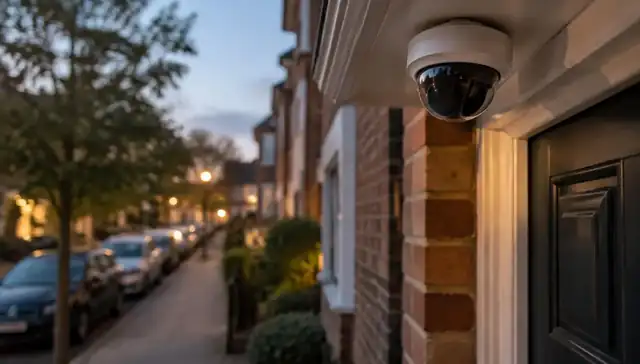
For new cameras or changes to an existing layout, we offer a free site survey. We look at the building with you, establish which entrances matter and explain the practical options. You receive a fixed written quote, not a camera package chosen without seeing the property.
Start with the recorder, not a shopping list
Tell us whether every channel has failed or just one view. We compare the monitor output with saved footage, inspect the power supplies and test connections along the affected route. If one camera drops out when rain arrives, we examine its junction and cable rather than assuming the camera itself has failed.
We can work on another installer's system, subject to equipment compatibility and supported access. Photographs of the recorder label and any error messages help us prepare. We explain which parts remain serviceable, what needs attention and any limitations of keeping an older recorder. Chargeable fault investigation and repairs are agreed separately from the free survey.
Surveying a mansion block entrance properly
West Hampstead's red-brick mansion blocks need a different approach from a single household's front path. During the free site survey we establish who controls the entrance, where visitors pause and whether doors or planting obscure the view. A camera watching the pavement may contribute little to identifying someone inside a recessed porch.
We agree the proposed image with the person responsible for the building. We also need a suitable recorder location, access to electricity and a realistic cable route. If work affects communal walls, we ask for managing-agent or freeholder approval before fixing anything. The written specification distinguishes shared coverage from cameras belonging to an individual flat.
West End Lane frontages and quieter rear approaches
Along West End Lane, passing people and vehicles make an unrestricted motion zone noisy. We draw detection areas around the entrance you actually want to monitor and check whether a delivery left beside the door remains visible. Shopfront glass and illuminated signs need checking for reflections before we settle on a lens position.
Around Fortune Green, Victorian conversions can have separate front steps, lower entrances and shared rear access. We assess those approaches individually. A broad street-facing image does not replace a closer doorway view. We keep brackets and cabling discreet, protect existing finishes and flag any conservation or listed-building consent that needs confirming before external alterations.
When live pictures hide a recording problem
Seeing today's entrance on a screen does not establish that yesterday's visit was recorded. We check the drive status, recording timetable, channel selection and clock. We then search for an event and play it back. A recorder that repeatedly beeps or reboots needs diagnosis rather than having its warning sound silenced.
If footage matters for an incident, tell us before we change storage or reset equipment. Avoid formatting the drive. We cannot promise recovery of missing recordings, and a replacement disk does not bring old footage back. Where export remains possible, we help you save the relevant clips before carrying out agreed changes.
Cable routes through converted houses
We trace existing wiring before deciding whether it can stay. Sound coax may support compatible analogue equipment; an IP upgrade needs the appropriate network infrastructure. We check connectors, power requirements and recorder support together. Reusing a hidden damaged cable simply carries the original fault into the new installation.
In a conversion, the shortest route may cross somebody else's space. We agree access beforehand and avoid loose cables in common stairs. Where a route crosses a fire-resisting element, suitable sealing matters. We explain visible containment, entry positions and maintenance access during the survey, so a tidy installation does not depend on an unexpected alteration later.
Make the night image earn its place
An entrance near West Hampstead Thameslink can be bright in one direction and shaded under a canopy. We assess the light reaching a person's face, not simply how bright the background looks. Infrared illumination reflected from nearby brickwork can overwhelm a picture; changing the camera angle may help more than adding another light.
We explain whether colour recording needs extra illumination and where that light would fall. We avoid aiming lights towards residents' windows. Trees, moving shadows and headlights also affect detection, so we adjust the active zones and describe what still needs checking after dark when a daylight appointment cannot demonstrate the final night view.
Shared access without shared passwords
For a block system, we identify a responsible account holder and decide who needs playback rather than giving every resident unrestricted control. We use privacy masking where appropriate and discuss signage, retention and secure exports. Recording beyond your boundary carries data protection duties; positioning alone does not remove them.
We demonstrate phone viewing over mobile data, not just the building's Wi-Fi. Residents should know who to contact if access changes when a tenancy ends. Supported account resets require evidence of authority; we do not bypass ownership checks. Audio stays disabled unless there is a justified, agreed reason for it.
Speak to us about your NW6 system
Call Finchley Aerials free on 0800 206 2385 or WhatsApp 07595 292534. Our booking hours are Monday to Saturday, 8am to 7pm, with on-site work until sunset. Tell us about entry arrangements and any parking restrictions when arranging access.
We bring 25 years' experience and offer same-day attendance where possible. Advice is free. Whether the priority is restoring an inherited recorder or planning new coverage, we set out the work and a clear price before starting.