
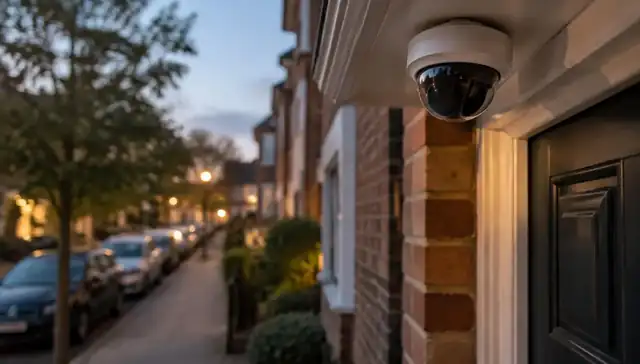
If you already have cameras, we would rather investigate what is wrong than assume everything needs replacing. We work on systems fitted by other companies, from an intermittent outdoor view to a recorder that no longer saves footage. We explain the diagnosis, what remains serviceable and the cost of the proposed remedy.
Start at the garden gate and work towards the recorder
Tell us which access route worries you most. A long garden, detached garage or narrow side path may need attention even when the front door already has a camera. Around Grange Park, we assess the actual distances and obstructions rather than using the same lens for every outdoor position.
During the free survey we consider where someone enters the frame, how large they appear and what might hide them. We also inspect available cable routes and recorder space. You receive the recommended scope in writing, with any separate diagnostic charge explained before it is incurred. There is no obligation to approve an installation.
Cottages, villas and semis do not share one camera plan
Victorian cottages around Winchmore Hill Green may have compact frontages where a wide street-facing view captures far more pavement than doorway. We look for a position that concentrates on the entrance. Where heritage controls or protected building status apply, the relevant permissions need checking before we drill or run visible cable.
Edwardian villas and inter-war semis can present a different problem: one high camera sees the drive but misses the approach beside the house. We may propose separate overview and entrance views, explaining the purpose of each. More cameras are not automatically better if they merely repeat the same incomplete angle.
Rescue an unreliable system before expanding it
A new rear camera is little help if the recorder's storage has failed. We check the existing system first: power supplies, accessible connections, camera channels and playback. Tell us whether the failure happens continuously or only after darkness, rain or a router restart. Those distinctions help direct the tests.
We assess equipment from other installers and explain compatibility before ordering parts. An older coax installation may accept a suitable replacement without rewiring the house, but formats and power arrangements must match. If a component is unsupported or replacement would leave a recurring fault unresolved, we say so and explain the alternative.
Take trees, porch lights and infrared reflections seriously
Near Grovelands Park, mature planting can shade an entrance and move across the view in wind. We examine what the camera will see now and where growth might obstruct it. Detection settings can reduce unwanted alerts, but they cannot see through a hedge or compensate for a branch pressed against the lens.
For night coverage we consider lighting at the subject, not simply the streetlamp nearby. Colour needs sufficient illumination; infrared can work in darkness but gives a different image. Close brickwork, cobwebs and bright porch fittings can cause flare. We discuss positioning and maintenance before treating a higher-resolution camera as the answer.
A permanent wired route should be tidy and serviceable
We agree cable positions with you, including any passage through finished rooms. For new wired network cameras, suitable Ethernet cabling carries video and power, removing the need to charge batteries. Connections outside need weather protection, entry points need sealing and exposed cable must be fixed clear of gates and moving doors.
The recorder belongs somewhere dry, ventilated and reasonably secure, with access for maintenance. A hidden cupboard without airflow may not be suitable. If the garden building is separate, we assess the connection and power arrangements rather than assuming ordinary home Wi-Fi will provide a dependable link across the plot.
Know how to find an event when it matters
At handover we check a recording, not just the live screen. We demonstrate date selection, playback and supported clip export, then explain storage settings. Available recording history depends on capacity, image quality, recording mode and camera count. We discuss that balance rather than guaranteeing retention from a drive size alone.
We test phone viewing through mobile data and help configure authorised accounts. Local recording on a correctly set up wired system need not stop when broadband fails, although mains power is still necessary. Remote access will be affected. Before recorder changes, tell us about important footage so we can discuss preservation without promising recovery.
Keep the neighbours outside the unnecessary part of the frame
We aim coverage towards your own access routes and apply privacy masks where the equipment supports them. A high view across several gardens may be easy to achieve but difficult to justify. We explain the implications of capturing beyond your boundary, including signage, secure access and appropriate handling of recorded material.
For flats or rented properties, obtain permission for shared or landlord-owned surfaces before booking installation. Decide who controls the account and whether anyone else's old access should be removed. Audio is normally disabled. We provide practical installation guidance; anyone needing a legal determination about recording should obtain appropriate independent advice.
A straightforward booking without a camera sales pitch
For free advice, call 0800 206 2385 during our Mon-Sat hours of 8am-7pm. You can WhatsApp 07595 292534 with your postcode and equipment details, keeping login information private. We aim for same-day service where possible and carry out on-site work up to sunset, subject to access and conditions.
We are Finchley Aerials and Satellites, at Britannia Road, Finchley N12 9RU, with 25 years' experience. Request a free CCTV site survey for a new system or describe the repair you need. We provide a fixed written quote for agreed work and do not start chargeable work without explaining the price.