
We bring 25 years' experience to TV diagnostics across N7, including mansion blocks on Holloway Road and terraces towards Tufnell Park. We investigate broken pictures, lost channel groups and suspected 4G/5G interference using measurements rather than guesswork.
First establish who has lost reception
Ask another household using the same aerial whether their picture has changed. Their answer is useful evidence, although different branches can behave differently. We ask about every affected room, the first signs of trouble and any electrical or building work around the same time. Please leave the existing tuning alone if channels have suddenly vanished.
Along Caledonian Road, a converted house can contain several unrelated TV arrangements. We identify which cable belongs to your outlet before testing it. We do not unplug an unlabelled shared connection just to see whose television stops, and we agree access with whoever controls the distribution equipment.
Read the signal, not just the television bar
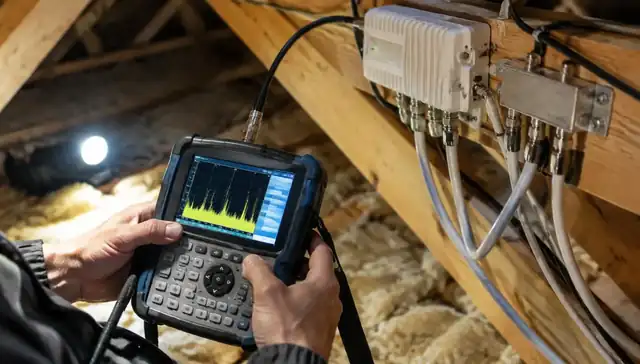
A receiver percentage is not a complete reception test. We measure level, modulation error ratio and bit error rate across the multiplexes carrying your channels. MER describes modulation quality; BER reveals data errors at the stages our meter reports. A loud but corrupted signal can be less usable than a quieter clean one.
We compare the affected socket against an accessible reference feed. The difference helps distinguish a poor incoming broadcast from deterioration inside the building. We explain what each comparison establishes, including any limits caused by inaccessible roof equipment. One successful channel does not clear the whole aerial system.
Following the branches through a mansion block
Holloway Road blocks can have a common aerial feeding several floors through amplifiers, taps and splitters. We establish the layout and inspect the relevant power supply before considering a new aerial. A failed branch can leave neighbouring homes working normally, so the number of affected flats guides rather than settles the diagnosis.
We seek managing-agent permission for locked cupboards and risers. Inside your home, we compare the wall outlet, short connecting lead and receiver input. If the shared feed is faulty, we describe where responsibility appears to sit and what further authorised access is needed. We leave unrelated households connected.
Putting suspected mobile interference to the test
Dense urban reception raises sensible questions about mobile transmissions, but proximity to a mast proves nothing by itself. We examine the spectrum and check whether unwanted energy is driving an amplifier or tuner beyond its useful operating range. We then compare performance with suitable filtering where the evidence supports that test.
The position of a filter matters. Once an amplifier has distorted the wanted television signal, a filter fitted afterwards cannot undo that damage. We consider the input side, check cable screening and repeat the multiplex readings. If filtering makes no meaningful improvement, we investigate another cause instead of leaving you with an unsupported explanation.
When the picture changes with rain or movement
A fault that appears during gusts may involve a loose fixing, strained cable or an unreliable joint rather than the transmitter. We inspect accessible outdoor cable and connections for cracking, water entry and unsupported weight. Roof work depends on safe access and the condition of the mounting, not just whether a ladder fits nearby.
Keep a note of the channel, weather and duration when breakup returns. Photographs of the screen message help us separate reception loss from a wrong input or equipment warning. If conditions remain good throughout our visit, we report the available margin and physical findings without pretending to have reproduced the fault.
Proving a single-room fault before replacing equipment
A typical job here: a bedroom television in a Victorian conversion loses several channels while the living room remains steady. We compare both outlets with the incoming feed, then test the bedroom lead and socket termination. A clean source with errors appearing on that branch directs attention to its cable and connections, not the roof aerial.
We substitute a known working flylead where appropriate and inspect any user-added splitter. We also check whether moving the television has pulled a connector loose. Repairs follow the failed test; we keep functioning parts and do not replace distribution equipment merely because its casing looks old.
Finish with the same measurements we started with
After an approved repair, we return to the test points that exposed the loss. We compare level and quality across the relevant multiplexes and check the agreed rooms on their normal receivers. Restored pictures are important, but the readings also show whether reasonable reception headroom has returned.
We tune only after a stable feed is available and check the programme groups you originally reported. We describe what was repaired, what remains untouched and whether another visit or specialist access is necessary. Where shared equipment needs attention, you receive a practical explanation to pass to the building manager rather than a vague instruction to replace everything.
Arrange a Holloway diagnostic visit
Call Finchley Aerials on 0800 206 2385, free to call, or send the symptoms by WhatsApp to 07595 292534. We answer Mon-Sat 8am-7pm and carry out on-site work until sunset. Same-day attendance is possible when the schedule and access allow; we confirm arrangements rather than promising a roof visit we cannot safely complete.
Tell us your N7 address, floor and whether a caretaker holds the relevant keys. We explain the diagnostic visit arrangements, offer free advice and give a clear price before work starts. Any proposed repair receives a fixed written quote so you can decide with the findings in front of you.