
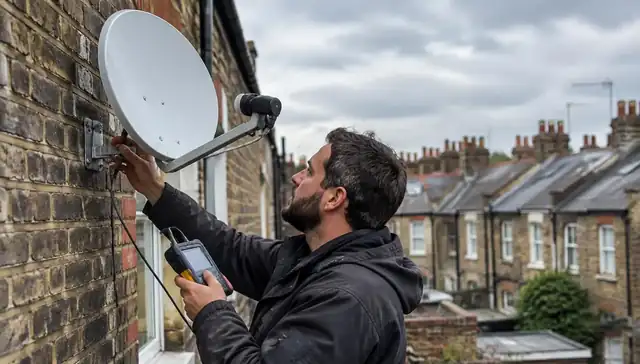
We install and repair satellite systems across N17, including Victorian terraces around Bruce Castle and newer homes at Tottenham Hale. Our work covers dish positioning, replacement receiving units, cable renewal and measured alignment. We explain the practical choices before asking you to approve an installation.
Start with the box you intend to watch
Tell us the model number, not just the name Sky or Freesat. Older receivers, Sky Q equipment and newer Freesat recorders can need different feed arrangements. We inspect the LNB, the receiving head on the dish arm, and establish whether its outputs suit the box. Matching plugs alone do not establish compatibility.
We also ask how you use television: one screen, independent rooms or recording while watching something else. That determines the required feeds and distribution. We work independently of Sky, so subscription changes and account activation remain with the provider; our responsibility is the agreed receiving installation.
A private dish or the estate's shared system?
On estates and regeneration developments, the roof equipment may serve many homes. We ask who manages it and whether other residents have the same problem. An isolated failed outlet calls for different testing from a whole block losing reception. We do not adjust communal equipment simply because we can reach it.
With authorisation, we check the flat's feed and investigate the distribution arrangements. A shared system may need compatible switching equipment for a receiver upgrade. We explain that to the managing agent and separate your private cabling from shared components, reducing the risk of interrupting someone else's viewing.
Finding a usable view above a terrace
Sky and Freesat normally receive from the satellite position at 28.2 degrees east. A dish needs an unobstructed path towards that position, not a view of the local television transmitter. A neighbouring extension, a tree or scaffolding can interrupt the path even when terrestrial television works perfectly.
Around Bruce Castle, we consider rear elevations and side returns before suggesting a prominent fixing. We inspect the actual masonry and choose access appropriate to the height. Roof placement is not automatically better: a lower wall position can be easier to maintain if it has the necessary clearance.
Dish positioning and permissions →Nearby Wood Green installations →
Restore a failing installation before replacing everything
Picture breakup during ordinary rain can point to weak alignment, a deteriorating connection or water inside the coax. We compare signal measurements at the dish and receiver, inspect weather protection and check the mounting for movement. Where the dish remains sound, replacing it may achieve nothing that a targeted repair cannot.
If wind changes the picture, we examine the bracket and its supporting surface before making adjustments. Tightening a bolt into crumbling material does not create a dependable mounting. We agree any necessary fixing repairs, then set the alignment and LNB rotation with instruments rather than relying on the screen alone.
Cable routes through converted N17 homes
A conversion can have several abandoned cables running to different floors. We identify which reaches your room before reconnecting anything. Existing coax can stay if testing confirms its condition and suitability; crushed sections, damp connectors and unsuitable splitters need attention rather than concealment behind a new wall plate.
For new runs, we agree the visible route and room entry with you. We clip the cable securely, protect outside joints and seal penetrations against weather. Inside, we leave enough accessible cable for the receiver without trailing it across a doorway. Shared passages need a route the building owner accepts.
Building work and access near Tottenham Hale
If an extension or scaffold will cover the dish's view, contact us before construction begins. We can assess an alternative mounting point and the extra cable required. A temporary location still needs secure support and safe access; resting a dish on a loose surface is not a sensible workaround.
Tell us about entry arrangements, parking restrictions and any event-related access difficulties near Tottenham Hotspur Stadium. We plan around the property rather than assume a van can stop outside. For leasehold premises or protected buildings, we ask you to resolve the relevant approvals before external changes are made.
Testing that reflects everyday viewing
After fitting or repair, we measure reception across suitable satellite transponders and check each required feed. One working programme does not prove the entire installation is healthy. We connect the intended receiver and demonstrate live pictures, then check its supported recording functions where the necessary service is available.
We explain which cables are in use and what any remaining limitations mean. Severe weather can interrupt satellite reception, but regular loss in light rain deserves investigation. The aim is a stable receiving margin from sound equipment, not an unrealistic promise that weather will never affect a broadcast.
Help identifying reception faults →Palmers Green satellite work →
Arrange your Tottenham satellite visit
Phone 0800 206 2385 free for advice, or send your postcode and receiver details by WhatsApp to 07595 292534. A photograph taken safely from ground level helps us understand an existing dish. Please mention communal ownership, restricted roof access and any planned building work when you contact us.
We are Finchley Aerials and Satellites, Britannia Road, Finchley N12 9RU, bringing 25 years' experience. Our contact hours are Mon-Sat, 8am-7pm; on-site work continues until sunset where safe. Same-day visits depend on availability. You receive a fixed written quote and a clear price before work starts.