
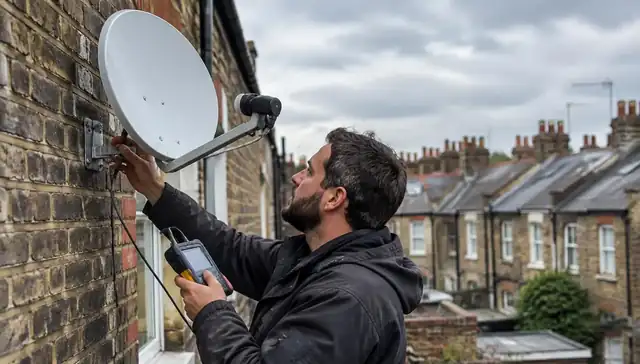
We work on compatible Sky and Freesat systems, including installations with older cables or a dish that has slipped out of alignment. Tell us what you want to watch and which receiver you own. We can then separate a reception repair from an upgrade that actually needs different equipment.
Permissions lead the plan around Central Square
Arts & Crafts cottages and houses around Central Square need a considered approach to external fittings. Hampstead Garden Suburb Trust requirements can apply separately from planning controls, listed-building restrictions and lease conditions. We identify the proposed position and route so you can seek the relevant approval before installation; a neighbour's dish is not proof that your proposal is permitted.
We can discuss less conspicuous walls and cable colours without promising that every hidden corner will work. If approval is outstanding, we keep that stage separate from physical alterations. Giving you a clear description of the intended work is more useful than arriving with equipment and discovering that the chosen wall cannot be used.
Dish positioning and conservation guidance →Hampstead Garden Suburb coverage →
Discreet does not mean enclosed
A satellite dish needs an unobstructed path towards the satellites used by your receiver, normally Astra at 28.2 degrees east for UK Sky and Freesat. Unlike an aerial, it cannot receive through a tiled roof in a loft. A rear mounting is useful only when the building itself does not block that path.
Near Big Wood, we assess the trees in the actual direction of reception, allowing for foliage rather than judging by bare winter branches. We compare suitable positions with a meter. Raising the dish is not automatically the answer: the support, visibility, future access and permissions must still make sense together.
How we plan satellite installations →Nearby Hampstead installations →
Identify the receiver before choosing the LNB
The small receiving unit on the dish arm is the LNB. Its outputs have to suit the box indoors. Sky Q commonly uses wideband feeds, while older receivers generally require universal outputs. Freesat requirements vary by model, so a brand name on its own does not tell us which arrangement to fit.
If you want to keep one receiver while adding another, we check the combination rather than simply adding a splitter. We count the required feeds, identify the existing cables and explain any recording limitations. Our work is independent of Sky; subscriptions, viewing entitlements and provider account changes remain matters for your provider.
Preserving joinery while bringing cables indoors
Original window frames and decorative details should not become convenient cable supports. We look for existing service entries and agree how the feed reaches your television without pinching coax beneath a sash. Where a fresh hole is needed, we discuss its exact position, inspect the route and seal the external entry afterwards.
We test concealed wiring before proposing to retain it. A neat old socket can conceal a damaged joint or cable unsuitable for the receiver's requirements. New outdoor runs use appropriate screened satellite coax, securely clipped with protected connections. Inside, we leave enough access to disconnect equipment without pulling the cable out of the wall.
Repair a weak installation at its source
Pictures that break up when rain starts can indicate a marginal installation, but the symptom alone does not identify the faulty part. We examine alignment, LNB condition, connections and the feed into the receiver. Water inside old coax needs attention even if moving the dish briefly improves the picture.
We inspect the support before making alignment adjustments. Corroded bolts or loose masonry cannot hold an accurate setting reliably. Sound components can stay; we explain which defects justify replacement and measure the result after repair. Severe weather can still interrupt satellite reception, so we do not promise a dish that is immune to every storm.
Reception investigation →Satellite repairs and realignment →
Shared houses need a shared-equipment check
In a converted property, an outside dish may serve more than the room you occupy. We trace ownership and connections before removing an apparently spare cable. Ask the freeholder or managing agent about communal equipment and access; permission from one resident does not authorise changes to the whole installation.
Where a shared distribution system already supplies the flat, we check its compatibility with the proposed receiver. An individual dish may be unnecessary. We explain whether work is confined to your outlet or involves equipment used by others, and arrange the appropriate authorisation before altering communal feeds.
Handover includes the functions you will use
We finish by checking reception at the receiver, not just by taking a reading beside the dish. We sample suitable channels and test the feeds required for available recording functions. You see which input to select and how the receiver is connected, with redundant leads identified rather than left as a puzzle.
A broadband problem is separate from dish reception. Catch-up services may depend on your internet connection even while satellite channels work normally. We explain that distinction during handover and point out any equipment or account restriction that remains outside the installation, so you know what the completed work has delivered.
Arrange a visit with the right information
Call 0800 206 2385 free or send a WhatsApp message to 07595 292534. Include your NW11 postcode, receiver model and any permission correspondence relevant to the proposed mounting. A photograph taken safely from ground level helps; please do not climb up to inspect the dish yourself.
We are Finchley Aerials and Satellites, Britannia Road, Finchley N12 9RU, bringing 25 years' experience and free advice. Our hours are Mon-Sat, 8am-7pm, with outdoor visits continuing until sunset. Same-day service is possible when the diary and access allow. We provide a fixed written quote and agree the scope before starting.